Under physiological conditions, B-cell maturation antigen (BCMA) is predominantly expressed on plasmablasts and terminally differentiated plasma cells (PCs). Under pathological conditions, BCMA is expressed on nearly all multiple myeloma (MM) tumor cell lines (80%–100%), and malignant PCs display significantly higher BCMA surface density than normal PCs. By mediating downstream signaling pathways, BCMA plays a critical role in the survival, proliferation, metastasis, and drug resistance of MM cells, making it a star target in MM drug development. Currently, numerous BCMA-targeted immunotherapies—including chimeric antigen receptor (CAR)-T cells, bispecific antibodies (BsAbs), and antibody-drug conjugates (ADCs)—have entered clinical trials, further improving remission rates and survival in patients with relapsed/refractory MM (RRMM), with overall response rates (ORR) reaching 70%–100% [1]. To date, four BCMA-targeted CAR-T products have been approved, achieving significant sales and therapeutic outcomes. Shenzhen Cell Valley has not only secured independent intellectual property in BCMA single-target and dual-target research but also produces BCMA CAR-T cells with high positivity rates and consistent quality. These have been administered to multiple patients, yielding highly positive results, with one patient achieving complete remission and being discharged.
1. Introduction to BCMA
BCMA, also known as CD269 or TNFRSF13C, is a type III transmembrane protein belonging to the tumor necrosis factor (TNF) receptor (TNFR) family [2]. Along with two other functionally related TNFR superfamily members—BAFF-R (B-cell activating factor receptor) and TACI (transmembrane activator and calcium-modulating cyclophilin ligand interactor)—BCMA co-regulates B-cell proliferation, maturation, survival, and differentiation into plasma cells [3].
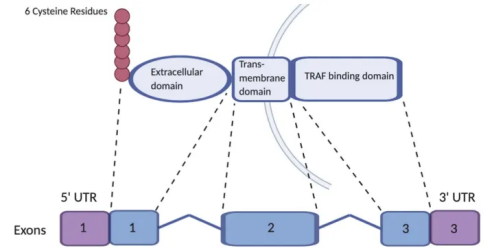
(Figure 1: Molecular structure of BCMA)
BCMA is highly expressed on malignant plasma cells but is absent on normal tissue cells (except plasma cells and a subset of mature B cells) and CD34⁺ stem/progenitor cells, making it a promising target for MM [1]. As shown in Figure 2, BCMA is undetectable in naïve B cells and hematopoietic stem cells, and is also undetectable in most normal non-hematopoietic tissues, except for organs such as the testis, trachea, and parts of the gastrointestinal tract, where detection is possible due to the presence of PCs.
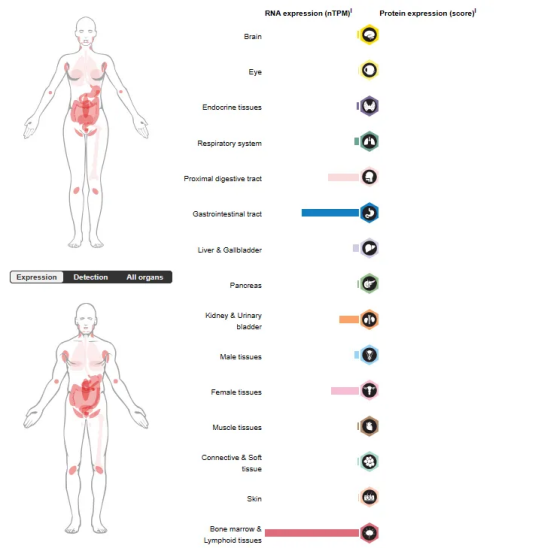
(Figure 2: Distribution of BCMA in human tissues and organs)
The primary ligands for BCMA are B-cell activating factor (BAFF) and a proliferation-inducing ligand (APRIL), which are mainly secreted in a paracrine manner by bone marrow stromal cells, osteoclasts, and macrophages. Upon ligand binding to BCMA, multiple growth and survival signaling cascades are activated in MM cells, most notably nuclear factor κ-light-chain-enhancer of activated B cells (NF-κB). These pathways regulate cell cycle checkpoints, leading to increased MM cell survival [4].
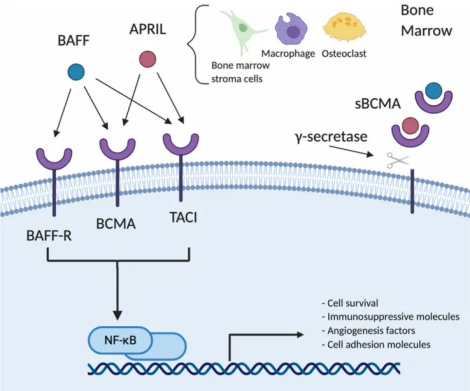
(Figure 3: BCMA signaling pathways)
2. Clinical Trials and Approved Products of BCMA CAR-T
Statistical analysis of specific targets for BCMA-directed drugs reveals that among 165 pipeline drugs, CAR-T therapies are the most prent, accounting for 91 (55%) of the total pipeline. Other targets commonly combined with BCMA in dual-target approaches include CD3, CD19, and CD38.
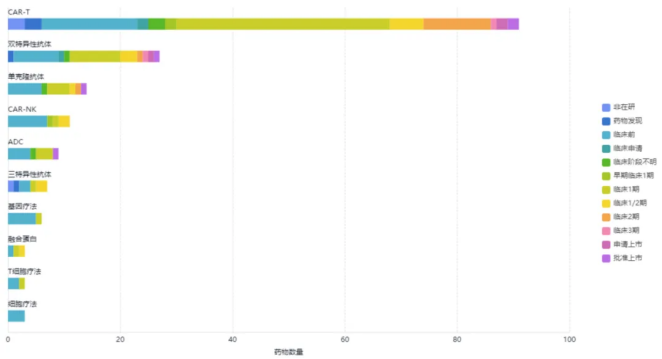
(Figure 4: Top 10 drug types and their R&D phases – source: Zhihuiya)
(Figure 5: Summary of BCMA-targeting product progress – source: Yaomo)
The four approved BCMA-targeted CAR-T products each cost over one million RMB. Abecma and Carvykti, from overseas, were launched in 2021 and 2022, with disclosed sales showing a year-on-year upward trend. Fucasso and Saikaize, developed domestically, were launched in 2023 and 2024, respectively; sales data have not yet been disclosed. All four CAR-T products have demonstrated outstanding clinical trial results.
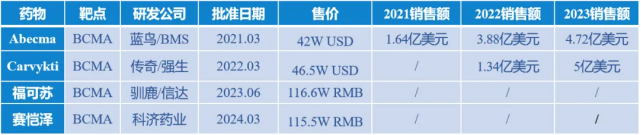
(Figure 6: Four approved BCMA-targeted CAR-T products)
The U.S. FDA approval of Abecma was based on data from the pivotal Phase II KarMMa trial, with 100 patients uable for efficacy. In this study, the overall response rate (ORR) was 72%, with 28% of patients achieving stringent complete response (CR). The median time to response was 30 days, and the median duration of response was 11 months.
On June 3, 2024, Legend Biotech presented results from Cohort D of the Phase II CARTITUDE-2 study of ciltacabtagene autoleucel (CARVYKTI) in multiple myeloma patients at the 2024 ASCO Annual Meeting. At a median follow-up of 22 months, patients (n=17) receiving a single CARVYKTI infusion with or without lenalidomide maintenance achieved an ORR of 94% (n=16/17), with all 16 responders achieving CR or better. Among 15 patients uable for minimal residual disease (MRD), 80% achieved MRD negativity at 10⁻⁵ [6].
On June 30, 2023, equecabtagene autoleucel (Fucasso), a fully human BCMA-targeted CAR-T product jointly developed by IASO Biotherapeutics and Innovent Biologics, was approved for the treatment of adult RRMM patients who have progressed after at least three prior lines of therapy. On January 25, 2024, a new IND was approved for equecabtagene autoleucel for the treatment of refractory generalized myasthenia gravis. On March 28, 2024, the IND was expanded to include RRMM patients who are lenalidomide-resistant after 1-2 prior lines of therapy. Updated results from the Phase I/II registrational study (FUMANBA-1) of equecabtagene autoleucel in RRMM, presented at the 2023 ASCO Annual Meeting, showed that at a median follow-up of 13.8 months (range 0.4–27.2), the ORR among 101 uable subjects was 96.0% (97/101), with 91.1% (92/101) achieving ≥ very good partial response (VGPR) and 74.3% (75/101) achieving stringent CR/CR.
The marketing application for Carvykti was based on data from the open-label, single-arm Phase I/II LUMMICAR STUDY 1 conducted in China. At the 2023 ASH Annual Meeting, results showed that as of August 16, 2022, among 102 patients with a median follow-up of 9 months, the ORR was 92.2%, with 85.3% achieving ≥ VGPR and 45.1% achieving CR.
3. Clinical Therapeutic Outcomes of BCMA CAR-T Prepared by Shenzhen Cell Valley
Shenzhen Cell Valley utilizes its proprietary industrial-scale retroviral vectors to produce CAR-T cells targeting CD19, CD38, BCMA-CD38 dual targets, and others, with transduction efficiencies exceeding 50%. The company provides end-to-end services covering T-cell collection, viral vector transduction, CAR-T expansion, safety testing, and product release. Shenzhen Cell Valley has collaborated with multiple hospitals, including Shenzhen Union Hospital of Huazhong University of Science and Technology and Guangzhou Women and Children's Medical Center, on CAR-T clinical research, supplying high-standard CAR-T products for over 30 patients with notable efficacy. From the day of receiving patient blood samples, cell manufacturing can be completed in approximately 12 days. Fresh formulations can be transported within the province at 2–8°C in 50 mL infusion bags; cryopreserved formulations are available for deliveries outside the province.
To date, three MM patients have been enrolled in the Anti-BCMA CAR-T clinical study. One patient with refractory MM treated with BCMA CAR-T has achieved complete remission and been discharged for several months, with serum M-protein levels dropping to 0 g/L!
Patient 1: Male, 41 years old. Initial serum M-protein level was 70.28 g/L. After VCD, VRD, DKd, DKRd ± bendamustine treatments achieved PR but subsequent progression with poor disease control, serum M-protein dropped to 20.23 g/L after multiple chemotherapies with myelosuppression. After expert uation, on August 26, 2023, the patient received combination therapy with ASCT and BCMA-targeted CAR-T cells. Thirty-three days post-infusion, serum M-protein decreased to 5.46 g/L—a >90% reduction—achieving VGPR. At month 3, M-protein dropped to 1.35 g/L, and by month 6, it was undetectable. IgG and serum kappa levels continued to decline, with IgG turning negative by month 6, achieving CR. The patient has remained relapse-free for over 9 months.
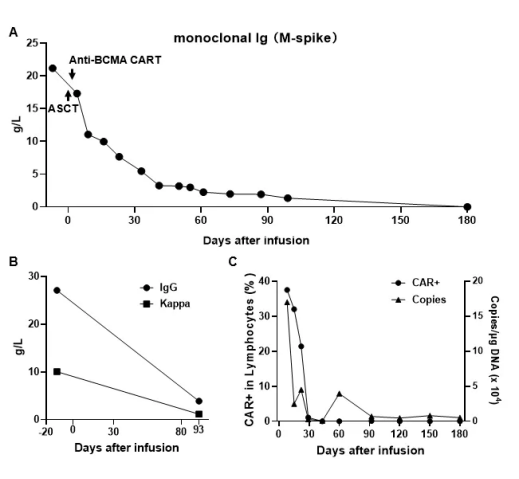
(Figure 7: Trends of IgM, IgG, and CAR in Case 1 during CAR-T therapy)
Patient 2: Female, 69 years old, diagnosed with multiple myeloma for over 12 years. She had received multiple prior therapies and has a history of hypertension and coronary artery disease. The patient was hospitalized in November 2023 due to a notable enlargement of a left thigh mass (7×8 cm). The mass showed no redness or swelling but had mild tenderness, with swelling of the left leg and foot. The patient responded poorly to multiple drug regimens and met the criteria for CAR-T therapy. Given the high tumor burden, after D-KBD combination chemotherapy to reduce tumor burden, the patient received anti-BCMA CAR-T infusion on January 8, 2024. On February 1, 2024, physical examination showed reduction of the left thigh root mass and mild swelling of the left leg and foot. CT on February 6, 2024, confirmed tumor shrinkage, and CT on March 5, 2024, showed stable disease with no progression.
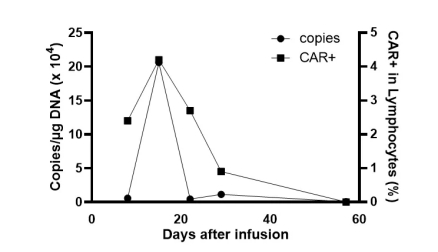
(Figure 8: CAR copy number reached 206,163 copies/μg on day 15 post-infusion in Case 2)
References
[1] Liu JH, Qiu LG, An G. Advances in targeted B-cell maturation antigen therapy for multiple myeloma. Chinese Journal of Clinical Oncology. 2022;49(20):1039-1046. [in Chinese]
[2] Du W, Wang XJ, Cheng J, et al. Advances in BCMA-targeted CAR-T cell therapy for relapsed/refractory multiple myeloma. Chinese Journal of Clinical Oncology. 2021;48(16):858-862. [in Chinese]
[3] Coquery CM, Erickson LD. Regulatory roles of the tumor necrosis factor receptor BCMA. Crit Rev Immunol. 2012;32(4):287–305.
[4] Carpenter RO, Evbuomwan MO, Pittaluga S, et al. B-cell maturation antigen is a promising target for adoptive T-cell therapy of multiple myeloma. Clin Cancer Res. 2013;19(8):2048-2060.
[5] Yu B, Jiang T, Liu D. BCMA-targeted immunotherapy for multiple myeloma. J Hematol Oncol. 2020;13(1):125. Published 2020 Sep 17. doi:10.1186/s13045-020-00962-7
[6] Legend Biotech presents earliest-to-date data and key subgroup analyses of CARVYKTI® for multiple myeloma at ASCO and EHA. Retrieved June 4, 2024, from http://mp.weixin.qq.com/s/EIVqa50eOpZCDAdVDD14Rg
 Scan to follow our latest news
 Working hours: Monday to Friday, 9:00-18:00
Contact:Ms. Lai
Email:laijiaqi@sz-cell.com
Address:No. 1, Rongtian Road, Jinsha Community, Kengzi Street, Pingshan District, Shenzhen, China (Hepure Biomedical Ecological Park)