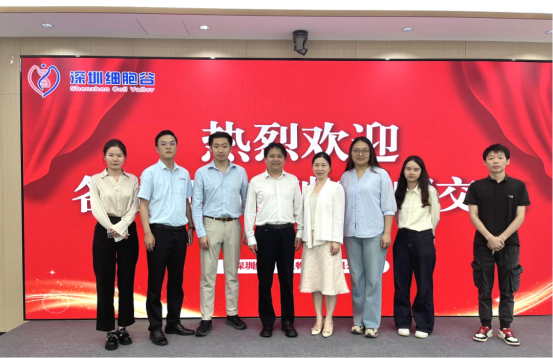
On June 17, a delegation from the Central South University Shenzhen Research Institute, including Li Shengqiu, Director of the Technology Service Center; Zhang Lu from the Technology Transfer Center; Yan Wei, Secretary-General of the Xiangya Branch of the Shenzhen Alumni Association of Central South University; and Ling Cong from the Central South University National Technology Transfer (Pingshan) Center, visited Shenzhen Cell Valley for an exchange visit. They were warmly received by Shi Yuanyuan, Chairman and General Manager of Shenzhen Cell Valley; Wei Zheng, Director of the Administration Department; Sun Rui, Head of the Marketing Department; and Fu Yuchen, Assistant to the Chairman. The two sides engaged in in-depth discussions on new models for university-enterprise cooperation.
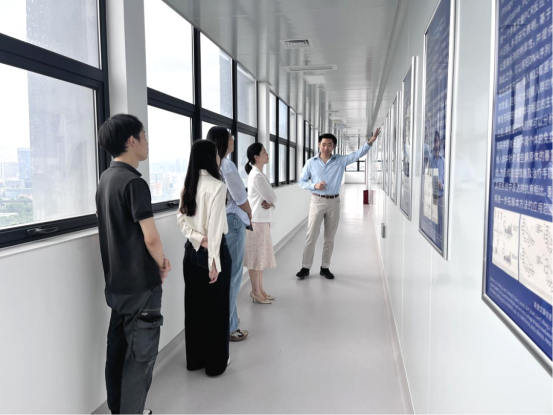
Accompanied and guided by Fu Yuchen, the teachers from Central South University toured the Smart Exhibition Hall of Shenzhen Cell Valley. They gained a detailed understanding of the Cell Valley Group’s strategic planning in the field of cell and gene therapy, the background of its founding team, core technologies (such as retroviral vector preparation), unique advantages in cell product manufacturing processes, and its philosophy on talent cultivation. This visit provided the delegation with a more intuitive understanding of Cell Valley’s positioning within the industry.
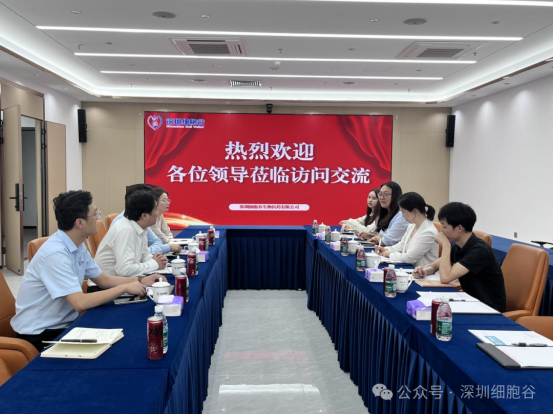
During the symposium, Shi Yuanyuan extended a warm welcome to the team from the Central South University Shenzhen Research Institute and introduced the latest progress and innovative achievements of Cell Valley in early-stage R&D, Investigator-Initiated Trials (IIT), and clinical translation. Shi Yuanyuan stated that university-enterprise cooperation is a core driver for promoting technological innovation and outcome translation in the biopharmaceutical sector. As a “985” and “Double First-Class” university and one of the first national intellectual property demonstration universities in China, Central South University—particularly its Xiangya School of Medicine—boasts rich scientific research achievements in biomedicine that align closely with Cell Valley’s development direction. He emphasized that the development of cell therapy, as a frontier technology, requires not only profound technical accumulation and a stable production quality management system but also advanced talent cultivation mechanisms. Shenzhen Cell Valley is committed to becoming a highland for professional talent cultivation in cell and gene therapy, helping the industry break through talent bottlenecks and drive high-quality development.
Yan Wei noted that since its establishment, the Pingshan Center of the Central South University National Technology Transfer Center has relied on the high-quality resources of Central South University and the Xiangya School of Medicine to actively promote the construction of an integrated platform for industry-academia-research-application outcome translation. The purpose of this visit was to deepen strategic mutual trust between Central South University and Shenzhen Cell Valley, focusing on key areas such as joint R&D of innovative products and pipelines, IIT project declarations, clinical translation applications, and academic exchanges. Both parties aim to accelerate the efficient translation of scientific research outcomes from the laboratory to the clinic, effectively improving patient treatment outcomes.
This exchange visit laid a solid foundation for deep cooperation between the two sides and provided strong support for the academic forum that Central South University will soon host at Pingshan Central Hospital, further expanding the space for academic exchange and collaboration.

About Central South University Shenzhen Research Institute
Established in 2008 and officially registered with the Shenzhen Municipal People’s Government, the Central South University Shenzhen Research Institute is a secondary unit of the university with the status of a public institution legal person. Its main function is to fully leverage the university’s advantages, serving as a bridge and window for the university to deeply integrate into the Guangdong-Hong Kong-Macao Greater Bay Area for high-level scientific research, high-quality outcome translation, and high-level talent exchange and cultivation. It supports the university’s “Double First-Class” initiative and serves the economic and social development of Shenzhen. Through work in talent cultivation, technological cooperation, outcome translation, and intelligence introduction, the Institute builds a major platform for “industry-education integration” that combines “government-industry-academia-research-application-finance,” empowering the high-quality economic and social development of the Greater Bay Area and the university’s “Double First-Class” construction.
 Scan to follow our latest news
 Working hours: Monday to Friday, 9:00-18:00
Contact:Ms. Lai
Email:laijiaqi@sz-cell.com
Address:No. 1, Rongtian Road, Jinsha Community, Kengzi Street, Pingshan District, Shenzhen, China (Hepure Biomedical Ecological Park)