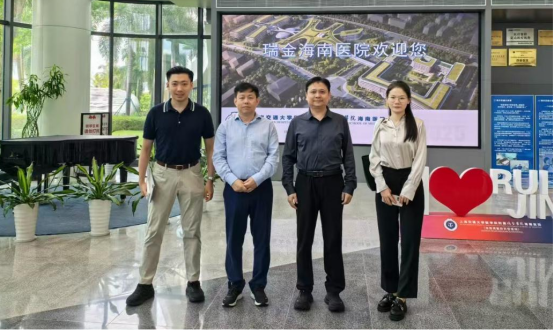
Recently, Professor Shi Yuanyuan, Chairman and General Manager of Shenzhen Cell Valley, along with Chief Scientist Professor Wang Jianxun, Assistant to the Chairman Fu Yuchen, and Minister of Marketing Sun Rui, visited the Hainan Boao Lecheng International Medical Tourism Pilot Zone Administration (hereinafter referred to as the "Lecheng Administration"), Ruijin Hospital Hainan affiliated to Shanghai Jiao Tong University School of Medicine (hereinafter referred to as "Ruijin Hainan Hospital"), and West China Lecheng Hospital of Sichuan University (hereinafter referred to as "West China Lecheng Hospital"). The team engaged in exchanges and reached multiple consensuses on co-building a public service platform for cell therapy and establishing cooperation models.
Ruijin Hainan Hospital
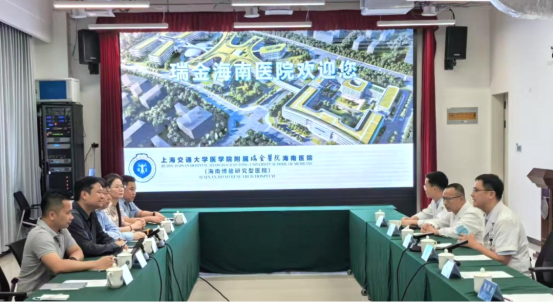
Vice Presidents Huang Peijian and Jin Jiabin of Ruijin Hainan Hospital led heads of departments including Hematology, Medical Oncology, Respiratory Medicine, and Technology Expansion to attend the symposium. They were joined by Zhou Lianghui, General Manager of the Industrial Investment Center, and Chen Changzhao, Director of the Science and Education Department of the Lecheng Administration.
Vice President Huang first introduced the overall layout of Ruijin Hainan Hospital as one of the first batch of National Regional Medical Centers. Focusing on three major discipline clusters—oncology, hematological diseases, and neurology—the hospital leverages Lecheng's "privileged drugs and devices" policy to conduct extensive Real-World Studies (RWS) to accelerate the market launch of new drugs and devices. The hospital expressed its hope to introduce Cell Valley's mature GMP system and third-party testing capabilities to co-build a quality control platform compliant with FACT standards. Furthermore, they plan to jointly apply for research projects focusing on frontier areas such as CAR-NK therapy for solid tumors and exosome therapy for pulmonary fibrosis. By leveraging Lecheng's policies, they aim to attract patients from the "Belt and Road" initiative and Southeast Asia, striving to create an Asia-Pacific demonstration center for cell therapy.
West China Lecheng Hospital
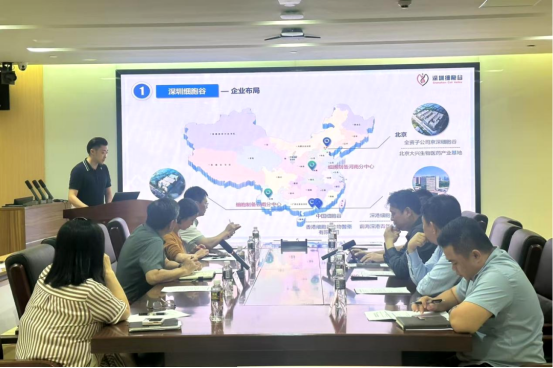
Vice Presidents Wang Xiaoyi and Xiao Hanxi of West China Lecheng Hospital, along with Xiang Jin, Minister of Business Development, and several disciplinary leaders, attended the meeting. Vice President Wang introduced that the hospital operates under a "four-party management, single legal entity" model, gathering over 160 experts with vice-senior titles or above practicing at multiple locations, and is adjacent to a 10,000-square-meter biomedical translation space.
During the meeting, Vice President Wang proposed a "Front Shop, Back Factory" cooperation model: the hospital would be responsible for clinical screening and follow-up, while considering cooperation with Cell Valley to undertake GMP production of viral vectors and cell preparations. Both parties would co-build a translation center to complete registration inspections, quality control, cold chain logistics, and real-world studies, thereby achieving a closed loop from R&D to clinical application.
Lecheng Administration
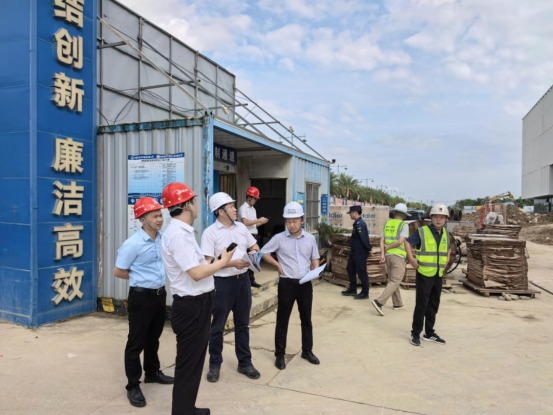
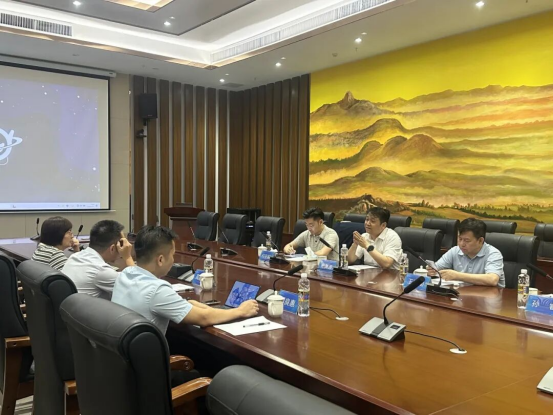
Accompanied by Zhou Lianghui, General Manager of the Industrial Investment Center, the Cell Valley team conducted a field visit to the Hainan Boao Medical-Engineering Translation Platform Project. Subsequently, they held a symposium with Gao Huimin, Deputy Director of the Lecheng Administration, and Cai Shanying, Chief Pharmaceutical Scientist and former Director of the Hainan Provincial Drug Inspection Institute.
Director Gao stated that as the nation's only "Medical Special Zone," Lecheng enjoys four privileged policies: privileged medical treatment, privileged research, privileged operation, and privileged international medical exchange. These policies have attracted over 80 multinational pharmaceutical and device enterprises from 18 countries and regions, with more than 600 innovative drugs and devices landing first in the zone. He proposed adopting a "light-asset operation, heavy-technology investment" approach to revitalize the 10,000-square-meter factory buildings, fully utilizing local space and assets. Regarding policy and regulation, he suggested coordinating resources from the Health Commission and Drug Inspection Institute to establish a green channel, enabling "immediate inspection and release" for samples, reagents, and finished products. In terms of funding and talent, he offered supporting talent policies and residency assistance. Regarding international standards, he expressed support for enterprises to lead the introduction of dual FACT/ISO 20399 certification, aiming to build the first cell preparation and quality control center in the Asia-Pacific region compliant with Chinese, American, and European regulations.
In his remarks, Professor Shi Yuanyuan thanked the Administration for its trust in Cell Valley and detailed that Cell Valley has already established collaborations with over 80 Grade-A tertiary hospitals nationwide, with extensive layouts in full-spectrum technologies including CAR-T, CAR-NK, TIL, exosomes, and gene editing. As a next step, Cell Valley is considering settling in Boao to integrate resources from Shenzhen, Hong Kong, and Hainan, jointly promoting the initiation, construction, and operation of the public service platform for cell therapy.
 Scan to follow our latest news
 Working hours: Monday to Friday, 9:00-18:00
Contact:Ms. Lai
Email:laijiaqi@sz-cell.com
Address:No. 1, Rongtian Road, Jinsha Community, Kengzi Street, Pingshan District, Shenzhen, China (Hepure Biomedical Ecological Park)